



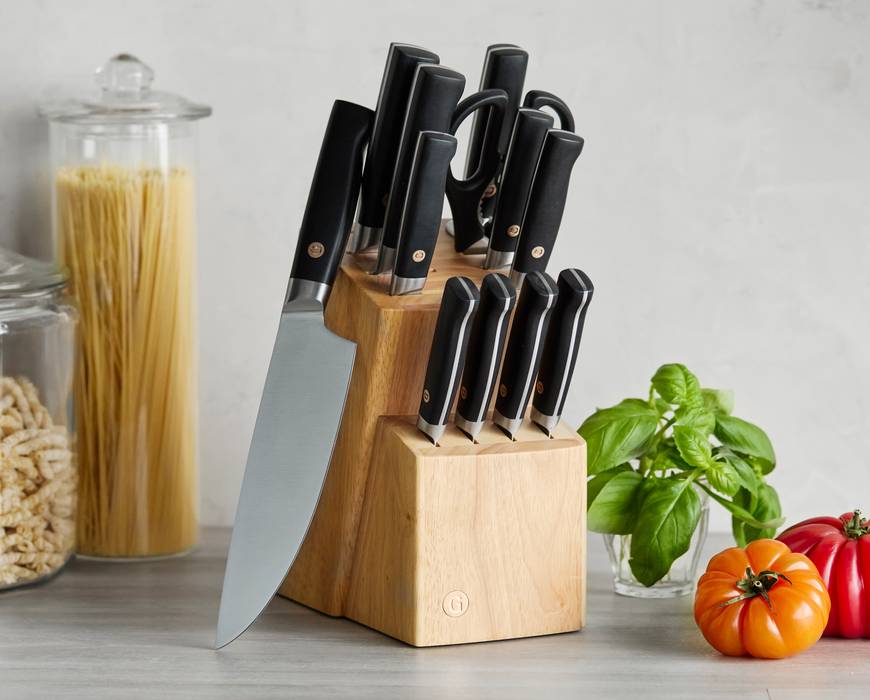
Types of Kitchen Knives
Kitchen knives are designed for specific tasks to improve precision, safety, and efficiency while cooking. While there are many knife styles available, most home cooks rely on a core selection that covers everyday food preparation. Understanding the purpose of each knife helps you choose the right tool for each task and build a practical knife collection.
What Are the 8 Basic Types of Knives and How Are They Used?
The following knives are considered the most essential in a kitchen. Each one is designed for a specific type of cutting or food preparation.
• Bread Knife
• Boning Knife
• Chef Knife
• Cleaver
• Nakiri Knife
• Paring Knife
• Santoku Knife
• Utility Knife
These knives together cover slicing, chopping, trimming, and precision work for most recipes.
Bread Knife
A bread knife has a long blade with a serrated edge. It is designed to cut through crusty or soft bread without crushing the interior.
Bread knives are also useful for:
• Cakes and pastries.
• Tomatoes and soft fruits.
• Foods with a hard exterior and soft inside.
Boning Knife
A boning knife features a narrow blade with a sharp point. It is designed to separate meat from bones with control and accuracy.
Boning knives are commonly used for:
• Trimming fat.
• Deboning poultry and meat.
• Working around joints and bones.
Chef Knife
A chef knife is the most versatile knife in the kitchen. It has a broad blade with a slight curve that supports a rocking motion.
Chef knives are ideal for:
• Chopping vegetables.
• Slicing meat and fish.
• Mincing herbs and garlic.
This knife handles most daily cutting tasks and is often the primary knife used in cooking.
Cleaver
A cleaver has a tall, rectangular blade designed for heavy duty tasks. It is heavier than most knives and provides strong cutting power.
Cleavers are commonly used for:
• Cutting through bones.
• Breaking down large cuts of meat.
• Crushing ingredients like garlic.
Some cleavers are also used for chopping vegetables due to their wide blade.
Nakiri Knife
A Nakiri knife is a Japanese style vegetable knife with a straight edge and squared tip. It is designed for clean, straight cuts.
Nakiri knives work best for:
• Chopping vegetables.
• Slicing greens and herbs.
• Precise up and down cutting motions.
Paring Knife
A paring knife is small with a short blade designed for precision work. It is easy to control and ideal for detailed tasks.
Common uses include:
• Peeling fruits and vegetables.
• Trimming small ingredients.
• Decorative cutting.
Santoku Knife
A Santoku knife is a Japanese all purpose knife with a wide blade and flatter edge than a chef knife. It is designed for slicing, dicing, and chopping.
Santoku knives are often used for:
• Vegetables.
• Fish.
• Boneless meats.
The flatter edge supports a straight cutting motion rather than rocking.
Utility Knife
A utility knife is a medium sized knife that falls between a chef knife and a paring knife. It offers versatility for tasks that are too large for a paring knife and too small for a chef knife.
Utility knives are useful for:
• Slicing sandwiches.
• Cutting fruits and vegetables.
• Light meat preparation.
Other Knives
In addition to the core knives, there are many specialty knives designed for specific tasks.
Examples include:
• Carving knives for slicing roasts.
• Fillet knives for fish.
• Cheese knives for soft or hard cheeses.
• Steak knives for table use.
These knives are useful additions but not essential for every kitchen.
What Is the Difference Between a Utility Knife and a Santoku Knife?
The main difference lies in size, shape, and intended use. A utility knife is narrower and shorter, making it suitable for small to medium tasks. A Santoku knife has a wider blade and is designed for chopping and slicing larger ingredients.
A utility knife is best for quick, light cutting tasks, while a Santoku knife is better for preparing full meals that involve vegetables, proteins, and repetitive chopping.
Which Knife Should I Buy First?
If you are starting your kitchen knife collection, a chef knife is usually the best first choice. It handles the widest range of tasks and can replace several other knives in everyday cooking.
Once you have a chef knife, adding a paring knife and a bread knife creates a well rounded and practical knife setup that covers most cooking needs.
Featured Collection

Cutlery
We’re making every step easy—these stainless steel knives bring the nonstick power of our pans to your prep. We’re talking quick, clean cuts and ergonomic shapes to keep your countertop undertakings comfortable.

